
We handle every step of your transfer switch installation to make sure your home is ready for safe and reliable backup power. At Little Electrical Solutions, our licensed electricians install generator transfer switches in Palm Coast with a focus on safety, code compliance, and long term performance. Whether you are preparing for storm season or want peace of mind during unexpected outages, we make it easy to connect your home to backup power without risk to your electrical system.
A transfer switch is a device that safely connects your generator to your home’s electrical system. It allows you to switch between utility power and generator power without dangerous overlap. Without a transfer switch, electricity can flow backward into the grid, creating serious safety risks and potential damage to your electrical system.
If your home is not properly set up for backup power, you may need to upgrade part of your electrical system before installation. In some cases, that means updating your panel so it can safely handle the added load, which is why many homeowners pair this service with electrical panel upgrades in Palm Coast.
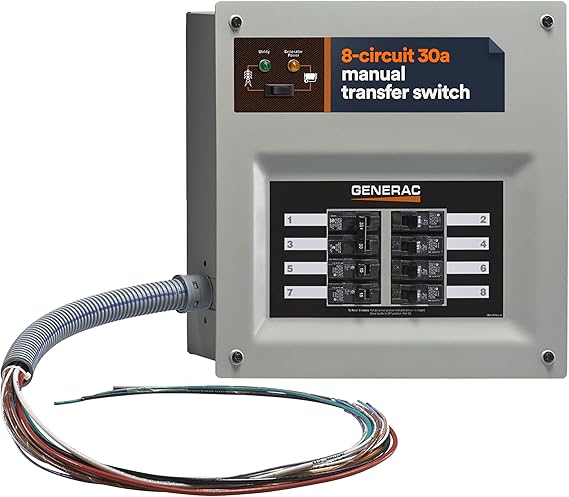
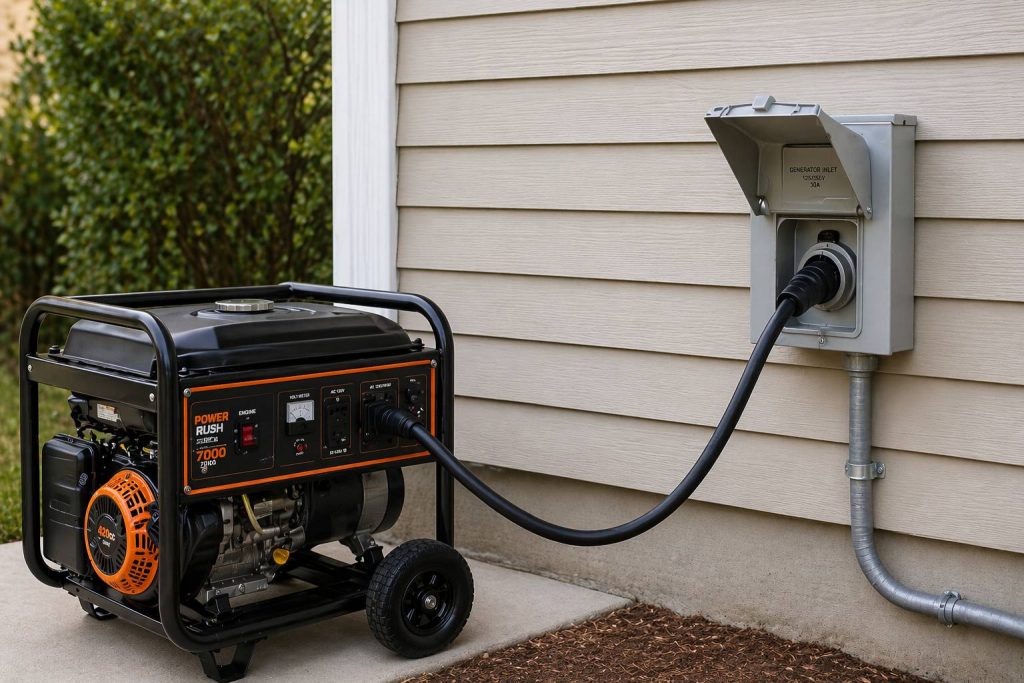
If you plan to run a generator during a power outage, a transfer switch is one of the safest and most important parts of the setup. Plugging a generator directly into your home without one can lead to backfeeding, which puts your home, your appliances, and utility workers at risk. A properly installed transfer switch allows you to safely power essential circuits like refrigerators, lighting, and outlets during an outage. This makes it easier to keep your home functional and comfortable until power is restored.
A professionally installed transfer switch allows you to safely power essential circuits like refrigerators, lighting, and outlets. It also ensures your system meets local electrical codes and operates reliably when you need it most. If you are planning a full backup solution, you may also want to explore whole home generator installation for a more seamless power experience.
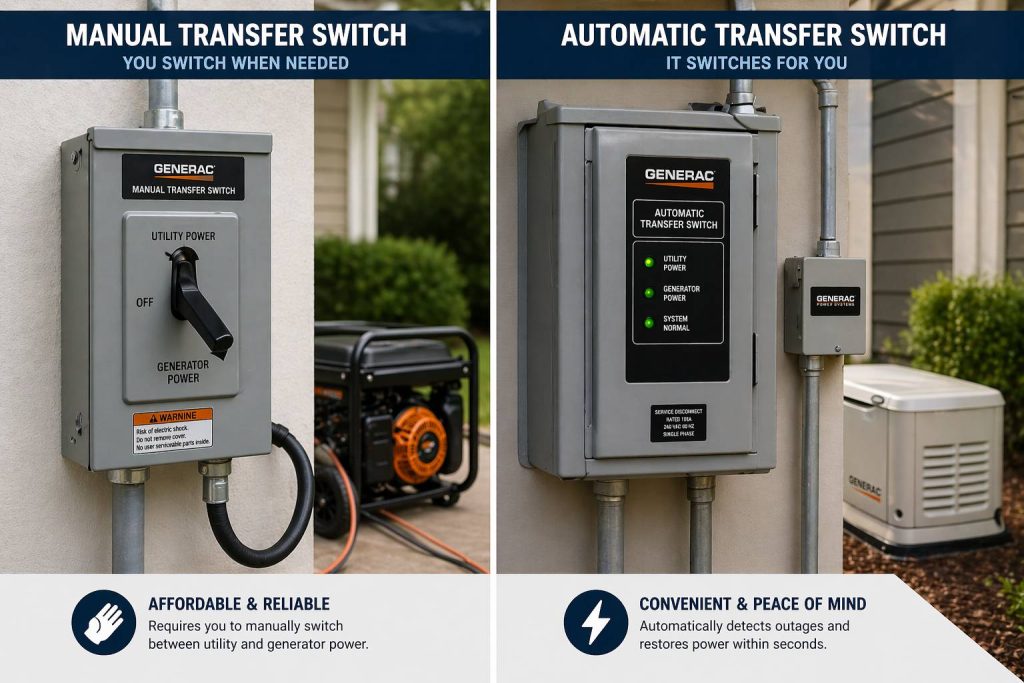
There are two main types of transfer switches, and choosing the right one depends on your needs and budget.
A manual transfer switch requires you to physically switch over to generator power during an outage. This is a cost effective option for homeowners who only need to power a few essential circuits.
An automatic transfer switch does everything for you. When the power goes out, it automatically switches to your generator and restores power without any action needed. This option is ideal for whole home systems and provides the highest level of convenience and protection. Our team can help you choose the right transfer switch based on your generator, your electrical system, and how much of your home you want to power during an outage.
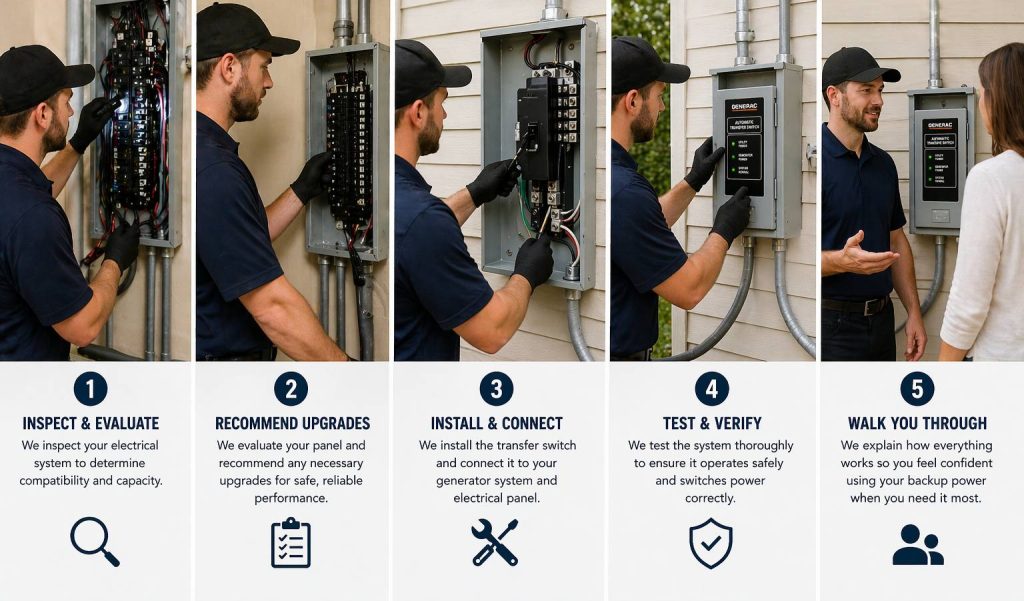
We make the installation process simple and safe from start to finish. Our team handles everything so your backup power system works properly when you need it most.
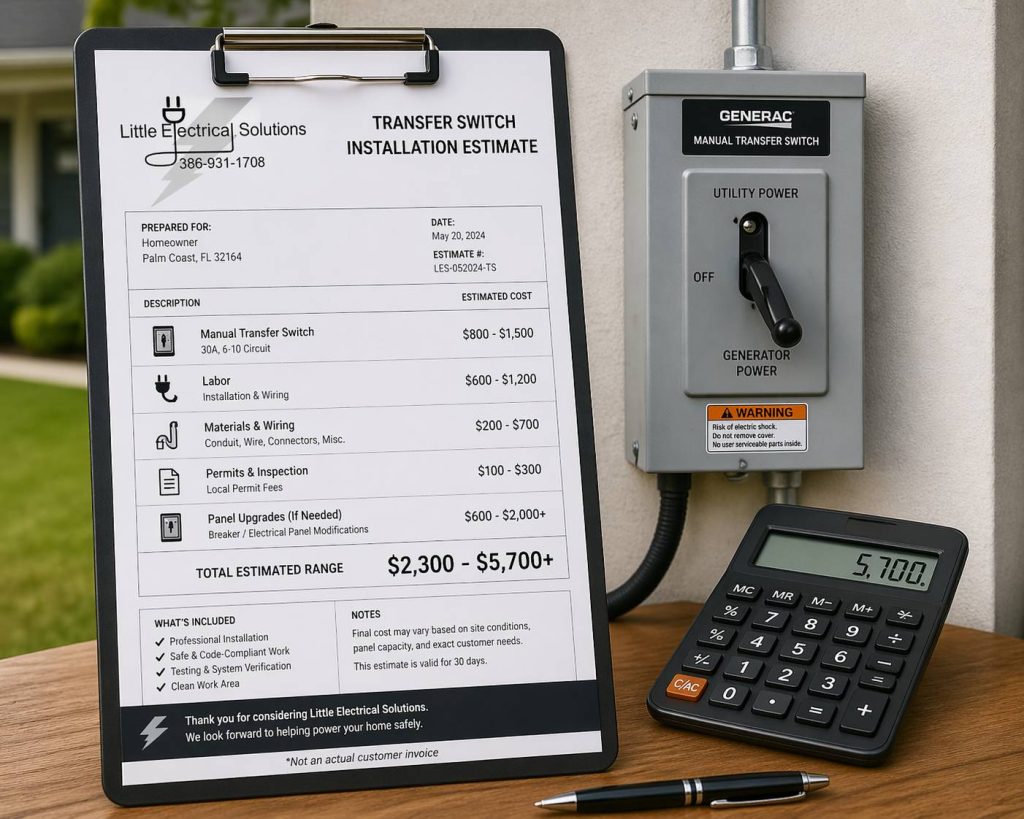
The cost of installing a transfer switch can vary depending on the type of switch, your electrical panel, and the complexity of the installation. Manual transfer switches are typically more affordable, while automatic systems cost more due to their advanced features and additional wiring requirements.
Other factors that can affect pricing include permit requirements, labor, and whether your electrical system needs upgrades. If your panel does not have enough capacity, you may need electrical panel upgrades in Palm Coast before installation can be completed safely. The best way to get accurate pricing is to have a licensed electrician inspect your setup and recommend the right transfer switch for your home in Palm Coast.
Homeowners choose Little Electrical Solutions because we focus on safety, reliability, and honest service. Our licensed electricians install transfer switches that meet local code requirements and are built for dependable backup power during outages. We take the time to evaluate your system, explain your options clearly, and recommend the right solution for your home.
Whether you are preparing for storm season, installing a new generator, or upgrading an existing setup, you can count on our team for professional workmanship and reliable service in Palm Coast and surrounding areas.
If you already own a generator but do not have a safe way to connect it, it is time to install a transfer switch. Many homeowners also upgrade when they experience frequent outages, want a more reliable backup power setup, or are tired of using extension cords during storms.
You may also need a transfer switch if your current setup feels unsafe or unreliable. If you are unsure, our team can evaluate your system and recommend the best solution. We can also identify any underlying issues through our electrical troubleshooting services to ensure your system is ready for backup power.
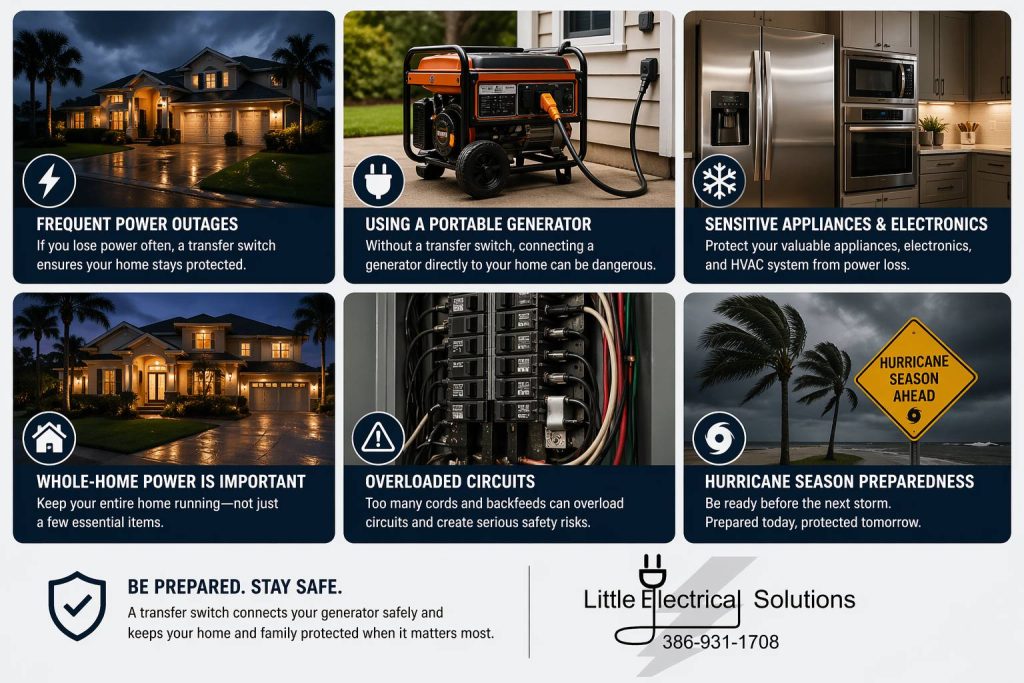
Yes, if you plan to connect a generator to your home, a transfer switch is required for safety and code compliance. Without one, electricity can backfeed into the power grid, which creates serious risks for your home and utility workers. A transfer switch allows you to safely power essential circuits during an outage while keeping your system properly isolated from the grid. In areas like Palm Coast where storms and outages are common, having a safe backup power setup is especially important.
A manual transfer switch requires you to physically switch your home from utility power to generator power when an outage occurs. This option is more affordable and works well for homeowners who only need to power a few circuits. An automatic transfer switch, on the other hand, detects a power outage and switches to generator power instantly without any action needed. This is the preferred option for homeowners who want a seamless backup power solution, especially when paired with whole home generator installation.
Most transfer switch installations can be completed in a few hours, but the exact timeline depends on your electrical system and the type of switch being installed. If your panel is already compatible and no upgrades are needed, the process is usually straightforward. However, if your system requires modifications or increased capacity, installation may take longer. A licensed electrician will evaluate your setup and provide a clear timeline before starting the work.
Transfer switch installation should always be handled by a licensed electrician. This type of work involves modifying your electrical panel and connecting a backup power source, which can be dangerous if done incorrectly. Improper installation can lead to electrical fires, system damage, or serious safety hazards. Hiring a professional ensures the installation meets code requirements and operates safely when you need it most.
Not all electrical panels are designed to handle a transfer switch. If your panel is outdated or does not have enough capacity, you may need electrical panel upgrades in Palm Coast before installation can be completed. A professional inspection will determine whether your system can support a transfer switch or if upgrades are needed to ensure safe and reliable operation.
A transfer switch allows you to safely power selected circuits in your home during an outage, depending on the size of your generator and how your system is set up. Most homeowners choose to power essential items like refrigerators, freezers, lighting, outlets, garage doors, and sometimes HVAC systems. With a manual transfer switch, you typically control a limited number of circuits, while larger systems or automatic setups can support more of your home. If you want to power your entire home without selecting circuits, a larger backup power system may be a better long term solution.
Yes, most transfer switch installations in Palm Coast require a permit to ensure the work meets local electrical codes and safety standards. Permits help protect homeowners by ensuring the installation is done correctly and inspected if necessary. A licensed electrician will handle the permitting process and make sure your installation is fully compliant.
The average cost of transfer switch installation in Palm Coast can vary based on the type of switch, your electrical panel, and the complexity of the installation. Manual transfer switches are usually more affordable, while automatic transfer switches cost more due to additional equipment and labor. Other factors that can affect the price include permit requirements, wiring distance, and whether your electrical system needs upgrades. The best way to get an accurate estimate is to have a licensed electrician evaluate your home and recommend the right setup.
Call Little Electrical Solutions today to schedule your transfer switch installation in Palm Coast, FL and protect your home with safe, reliable backup power.